

Why Marketing Works Best as a Connected Ecosystem – Not Isolated Tactics
by MasterWing Creative
If digital marketing ever feels overwhelming, this visual explains why.
Every line, channel, and connection in this graphic represents how modern marketing actually works in the real world – as a connected system, not a checklist of random tactics.
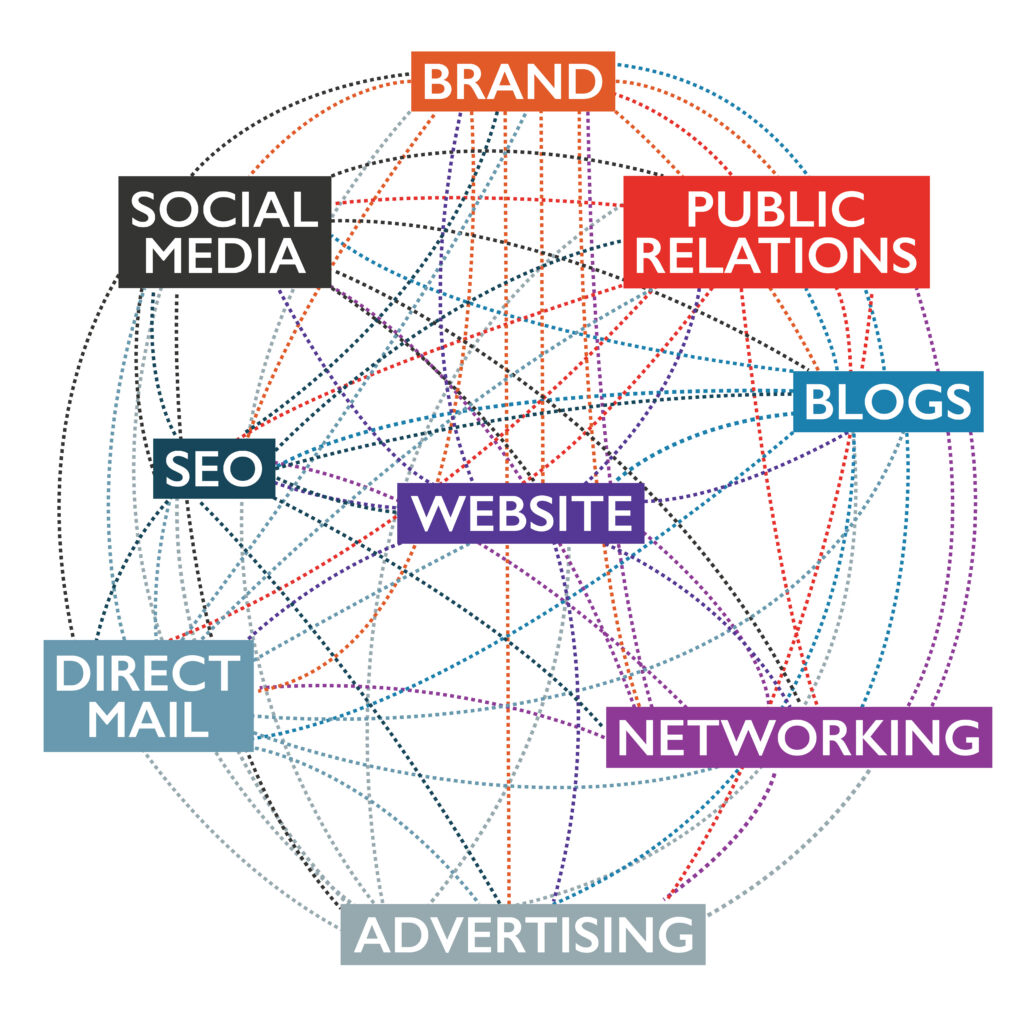
At the center of it all is your website. Everything else feeds into it, supports it, and relies on it to convert attention into action.
The Website Is the Hub
Your website is where interest turns into trust, and trust turns into leads or sales.
Every other element in the graphic either:
- Drives people to your website
- Strengthens what people find when they arrive
- Or reinforces your credibility before and after the visit
If your website is outdated, unclear, or hard to use, even great marketing elsewhere will underperform.
Your Brand Sets the Direction
Your brand is not just a logo or color palette. It is your voice, positioning, personality, and promise.
Brand influences:
- Website messaging and layout
- Blog topics and tone
- Social media voice
- PR angles
- Advertising creative
Without a strong brand foundation, marketing becomes inconsistent and confusing. With it, everything feels cohesive and recognizable.
Blogs Fuel the Entire System
Blogs are one of the hardest-working assets in the graphic.
They:
- Power SEO by targeting real search questions
- Provide content for social media
- Support PR pitches and thought leadership
- Build credibility for networking follow-ups
- Give advertising landing pages substance
A blog is never just a blog post. It is a reusable asset that feeds multiple channels at once.
SEO Connects Visibility to Intent
SEO ensures your website and blogs show up when people are actively searching.
It connects:
- Blogs to search engines
- Website pages to buyer intent
- Brand authority to long-term visibility
SEO also improves performance across other channels by making your website faster, clearer, and easier to navigate.
Read More: Focus on Search Intent
Social Media Amplifies and Humanizes
Social media does not replace your website – it supports it.
Social media:
- Amplifies blog content
- Reinforces brand personality
- Builds familiarity before someone clicks through
- Keeps your business top-of-mind after a website visit
Strong social media makes people more likely to trust what they see on your website when they get there.
Read More: The Value of Social Media Marketing for Small Businesses and Nonprofits
Public Relations Builds Authority at Scale
Public Relations adds third-party credibility to your marketing ecosystem.
It connects:
- Brand expertise to broader audiences
- Blog content to media narratives
- Website authority to external validation
PR mentions often drive spikes in website traffic, improve SEO through backlinks, and strengthen trust with new audiences.
Networking Turns Relationships Into Momentum
Networking may feel offline, but it is deeply connected to your digital presence.
When someone meets you in person, they will:
- Look up your website
- Check your social media
- Read your blogs
- Evaluate your brand instantly
Your digital ecosystem either reinforces the connection or quietly undermines it.
Advertising Accelerates What Already Works
Advertising works best when everything else is in place.
Ads amplify:
- Proven messaging
- High-performing blog topics
- Strong website landing pages
- Clear brand positioning
Without the ecosystem, ads feel expensive and short-lived. With it, ads scale what is already converting.
Direct Mail Bridges Offline and Online
Direct mail still works – especially when it connects back to digital. Email marketing, including newsletters, promotions, special offers and announcements, is still growing among small businesses and nonprofits, and driving increased online visibility and revenue.
It often drives people to:
- Visit your website
- Read a blog
- Follow you on social media
- Register for an event or offer
Direct mail is most effective when it is not standalone, but part of the larger system shown in the graphic.
Read more: How Small Businesses and Nonprofits Can Win Big with Email Marketing
Why This Connection Matters
Marketing breaks down when businesses treat tactics as separate tasks.
This graphic shows the truth:
- No single channel does the heavy lifting alone
- Every element strengthens the others
- The website anchors everything
When all pieces are aligned, marketing feels clearer, more efficient, and more measurable.
FAQs About Digital Marketing Tactics
Why can’t I just focus on one marketing tactic like social media or SEO?
Because no single tactic works in isolation. Social media builds awareness, SEO captures search intent, blogs establish expertise, and advertising accelerates results. The graphic shows how each element supports the others, with your website at the center converting attention into action. When one piece is missing, the entire system is weaker.
Why is the website placed at the center of the marketing ecosystem?
Your website is where decisions happen. No matter how someone finds you – through social media, Google, PR, networking, or direct mail – they almost always end up on your website. If the site is unclear, outdated, or hard to navigate, the impact of every other marketing effort drops significantly.
Are blogs still important if I’m active on social media?
Yes. Blogs fuel nearly every other channel. They support SEO, provide content for social media, strengthen PR outreach, and build credibility for website visitors. Social posts come and go, but blogs continue working for you long after they are published.
Does advertising work without strong organic marketing?
Advertising works best when it amplifies something that already performs well. A strong website, clear brand messaging, helpful blogs, and consistent social media all improve ad performance. Without that foundation, ads can become expensive with limited long-term return.
How long does it take for a connected marketing ecosystem to work?
Some elements like advertising and social media can drive quick visibility, while others like SEO and blogging build momentum over time. The advantage of an integrated system is that results compound. Each channel strengthens the others, creating more consistent growth instead of short bursts followed by drop-offs.