
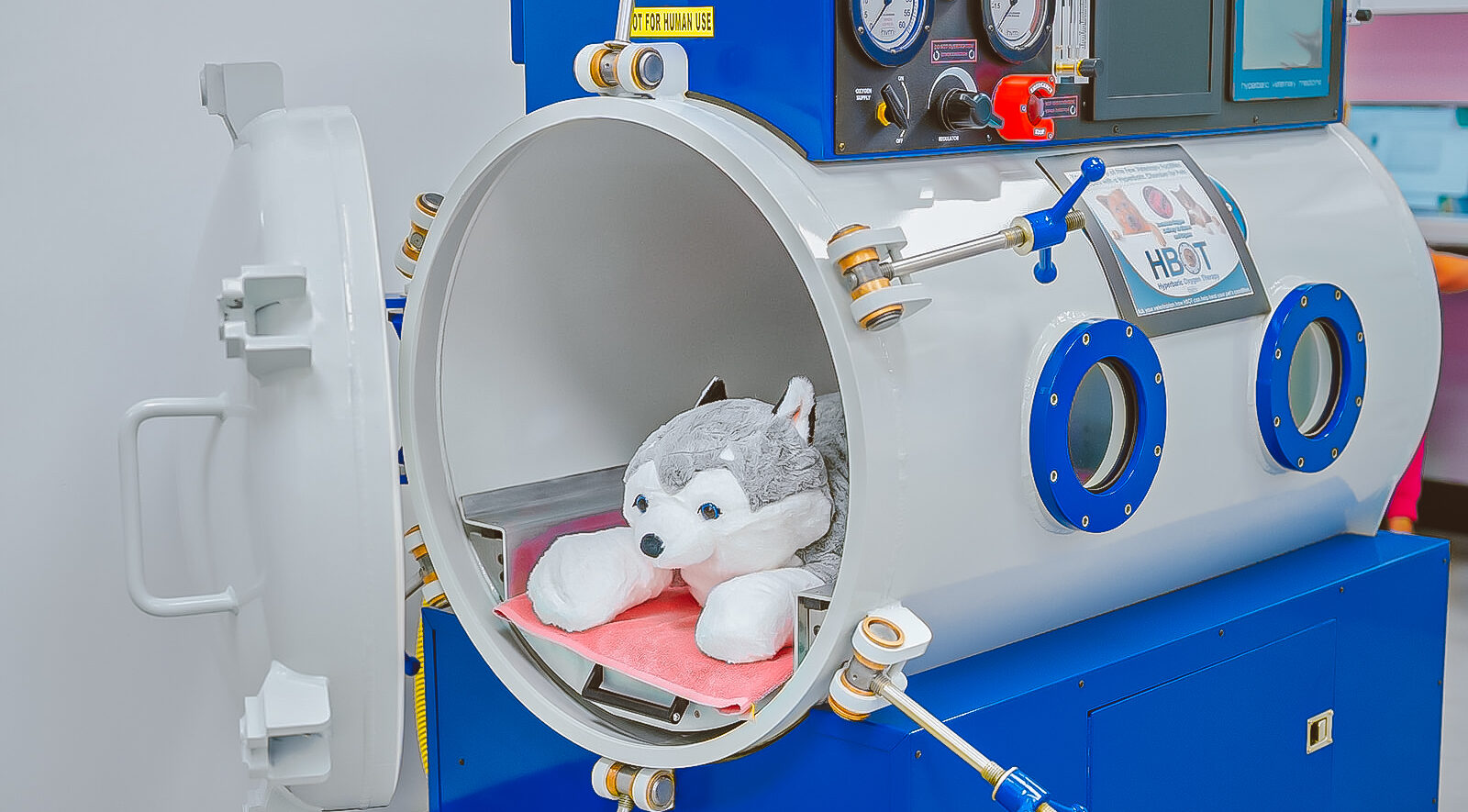
Hyperbaric Oxygen Therapy at Paws Veterinary Clinic
Learn how Paws Veterinary Clinic uses hyperbaric oxygen therapy for wounds, insect bites, trauma, intervertebral disc disease, back and neck pain, surgical recovery, arthritis, inflammation, and other conditions.
When a pet is recovering from a serious wound, traumatic injury, surgery, or spinal condition, oxygen can play an important role in the healing process. At Paws Veterinary Clinic, we offer veterinary hyperbaric oxygen therapy, commonly called HBOT, as an advanced, noninvasive treatment for dogs and cats.
Paws Veterinary Clinic is currently the only veterinary practice in Delray Beach offering HBOT. We treat our own patients and also welcome referrals from primary-care veterinarians and veterinary specialists throughout Palm Beach County.
What Is Hyperbaric Oxygen Therapy?
During HBOT, a pet rests inside a specially designed chamber while breathing concentrated oxygen under controlled pressure. The increased pressure allows substantially more oxygen to dissolve into the bloodstream and reach areas where circulation may be compromised by inflammation, swelling, infection, or tissue damage.
This enhanced oxygen delivery may help support the body’s natural healing processes by:
- Improving oxygen delivery to injured or compromised tissues
- Reducing inflammation and tissue swelling
- Supporting new blood-vessel formation
- Encouraging collagen production and tissue repair
- Supporting immune function and the body’s response to certain infections
- Promoting recovery after surgery or traumatic injury
HBOT is generally used as part of a comprehensive treatment plan rather than as a replacement for surgery, medication, wound management, rehabilitation, or other necessary veterinary care.
Which Pets May Benefit From HBOT?
Every patient is evaluated individually, but Paws frequently receives referrals for conditions including:
Insect Bites and Snake Bite Tissue Injury
Some insect bites/stings and snake bites can cause significant swelling, inflammation, pain, or tissue damage. When appropriate, HBOT may be incorporated into the treatment plan to improve oxygen delivery and help control inflammation while the patient receives other necessary medical care.
Wounds and Traumatic Injuries
Bite wounds, crushing injuries, degloving injuries, burns, compromised surgical sites, and wounds that are slow to heal may have reduced blood flow and oxygen delivery. HBOT can help support damaged tissue and may be particularly useful when swelling or impaired circulation is interfering with healing.
Pets with significant wounds may receive HBOT alongside wound cleaning, bandaging, antibiotics, surgery, pain control, laser therapy, or other treatments.
Back Pain and Intervertebral Disc Disease
Intervertebral disc disease, or IVDD, can cause back pain, inflammation, weakness, difficulty walking, or paralysis. HBOT may be recommended as an adjunctive therapy for selected IVDD patients to support oxygen delivery and help reduce inflammation around injured tissues.
Surgical Recovery
Following certain procedures, HBOT may support healing by improving tissue oxygenation and helping manage postoperative inflammation and swelling. It can be incorporated into a multimodal recovery plan based on the patient’s procedure, medical condition, and individual needs.
Infections, Abscesses, and Delayed Healing
Infected or poorly healing wounds often involve tissue with limited blood flow and reduced oxygen levels. HBOT may support conventional treatment by improving oxygen delivery to affected tissues. Antibiotics, drainage, surgery, cultures, and ongoing wound care may still be necessary.
Other potential applications include smoke inhalation, burns, neurologic injuries, severe inflammation, and selected conditions in which tissue oxygenation has been compromised.
What Happens During an HBOT Session at Paws?
Before beginning treatment, one of our veterinarians evaluates the patient, reviews the medical history, and determines whether HBOT is appropriate. Each treatment plan is customized according to the pet’s diagnosis, overall health, comfort, and response to therapy.
During treatment, the pet rests inside the chamber while the pressure is gradually increased according to the prescribed protocol. Most pets remain awake, and many relax or sleep during their sessions. Light sedation may be considered when medically appropriate for a patient who is unable to settle comfortably.
A typical session lasts approximately one hour, although treatment time and the number of recommended sessions vary. Some acute injuries may benefit from multiple treatments close together, while other conditions may require a different schedule.
How Do We Keep Pets Safe?
Because HBOT involves concentrated oxygen and increased atmospheric pressure, careful patient selection and strict safety procedures